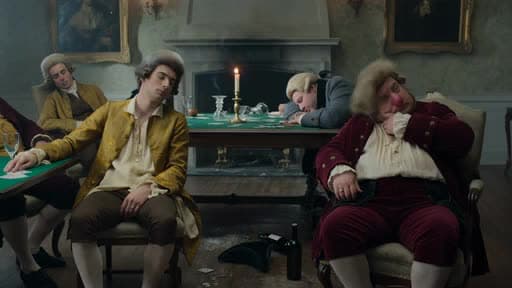
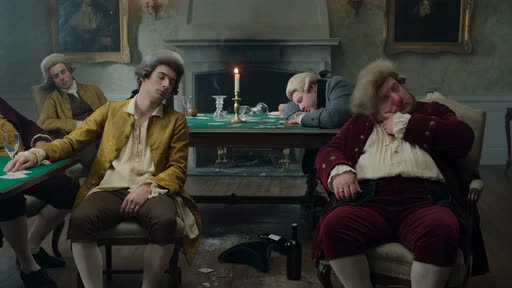
Ultra-cinematic 5-second shot in a dim 18th-century drawing room after a night of heavy drinking, several aristocratic gentlemen in period dress — powdered wigs, tricorn hats, velvet and silk coats in wine-red, grey, and gold — sprawl drunk and slumped in armchairs and around a green baize table littered with wine glasses, bottles, and a flickering candle. Empty bottles and a fallen hat lie scattered on the wooden floor, a cold stone fireplace and gilt-framed portraits behind them, cool grey daylight seeping through a window at left. The scene stirs with slow drunken action: one man slumped in a chair jerks awake and lifts his head groggily, another raises a glass to his lips and drinks, tipping it back, a third slides further down his chair and slumps onto the table, one leans over and mutters to his neighbor, someone knocks a bottle that rolls across the floor. Candle flame flickers and wavers, casting dancing shadows, wisps of pipe smoke curl through the air, dust motes drift in the shaft of window light. The camera moves with slow, elegant grandeur — a stately lateral dolly gliding across the room past the slumped figures, drifting from a wide tableau toward the two central drunk gentlemen, a faint natural handheld breath in the move. Soft, painterly natural light, candlelit chiaroscuro like an old master painting — cool blue-grey shadows against warm pools of candlelight and window glow, deep rich muted period palette of wine-red, grey, and gold, desaturated and elegant. Anamorphic widescreen, shallow depth of field, gentle lens flare, filmic contrast, deep detailed shadows, fine 35mm film grain, photorealistic prestige period cinema look in the style of Barry Lyndon, no CGI sheen. Languid, decadent, melancholic, painterly — the dissolute aftermath of an aristocratic night of excess. Sound: the low crackle of a dying fire, clink of glass, a bottle rolling across wood, drunken murmurs and a slurred laugh, a heavy snore, the tick of a clock, wind faint at the window, under a melancholic period chamber score — a slow, mournful harpsichord or string adagio, elegant and wistful.