
Architecture · AI Effect

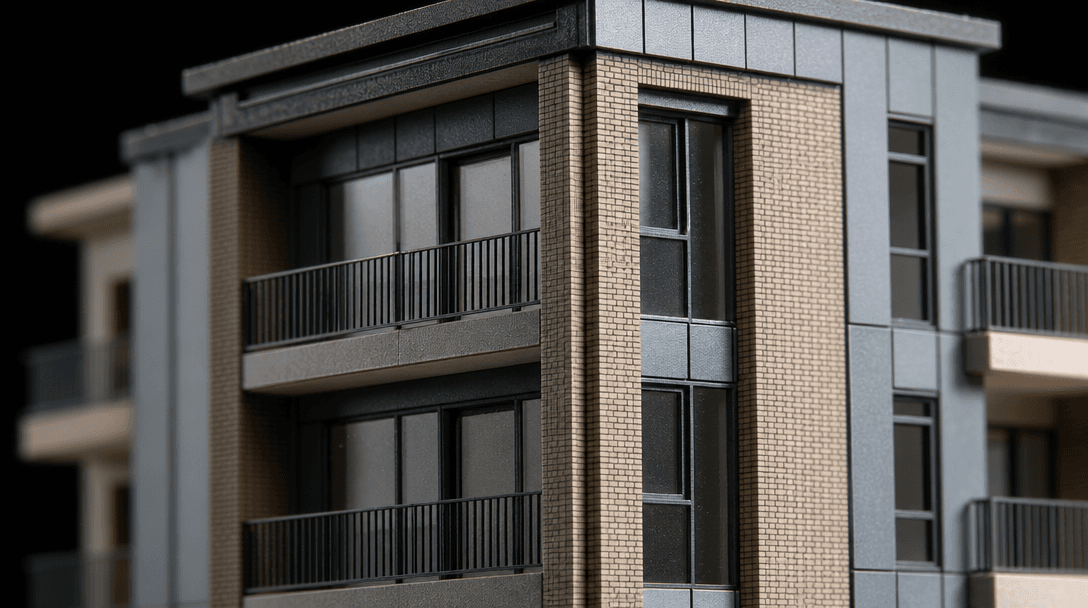
Turn Buildings into Miniature Models

Upload a building photo and Nim renders it as a hyper-detailed scale model — tilt-shift depth of field, miniature colour grade, production-ready output.

Try the template
Browse all 400+ templates

Everything you need

Built for creators, marketers, and teams shipping AI video at scale.

01

Tilt-shift depth simulation

AI replicates the selective focus and depth falloff of a professional tilt-shift lens, making full-size buildings read as hand-crafted scale models.

02

Works on any building

From residential homes to skyscrapers and heritage facades, the template adapts to any architectural subject without manual masking or selection.

03

Photorealistic scale-model look

Output textures, shadow behaviour, and colour saturation are tuned to mimic diorama and architectural model photography, not a cheap filter effect.

04

Renders under a minute

Production-quality miniature renders are delivered fast, so you can iterate on angles and source photos without long processing queues.

05

Commercial-ready outputs

Every render on a paid plan is cleared for commercial use — ready for pitch decks, listing pages, editorial spreads, or social campaigns.

06

Multi-model AI engine

Nim routes your generation through the best-fit model — Flux, Kling, and others — to maximise detail fidelity for your specific structure and angle.

07

One-click template start

No prompt engineering required — the architecture-miniature template encodes exact model parameters so results are consistent from the very first run.

08

Curated pro template library

The miniature template sits inside a broader library of professional architecture and design visuals purpose-built for studios, marketers, and creators.

Features

Built to ship

Abstract macro photograph of camera lens aperture blades open to a single sharp focal point, radiating soft bokeh haze o
F · 01

Tilt-shift depth-of-field replication

The template precisely simulates the top-and-bottom blur gradient that is the optical signature of a tilt-shift lens — the effect that makes a full-scale building read as a 1:200 architectural model. The AI identifies structural horizon lines and places the sharp focal plane automatically, so results are consistent regardless of the original photo's focal length or crop ratio. Architects and visualisation studios use this effect to inject a playful, editorial quality into otherwise documentary building photography.
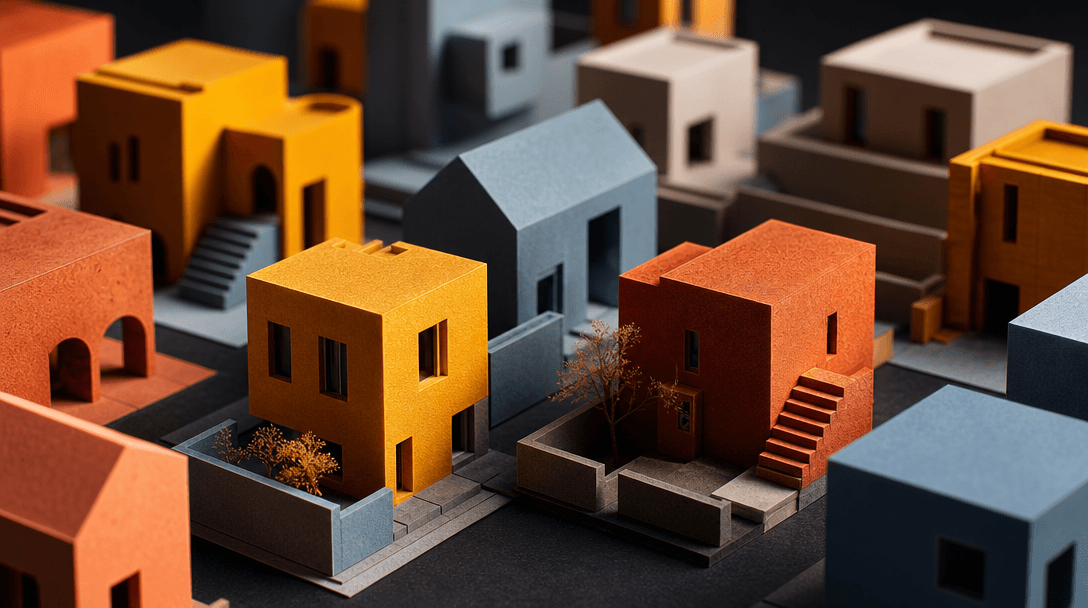
Close-up of a miniature architectural model colour palette — tiny model buildings in vivid saturated yellows, terracotta
F · 02

Miniature colour grade and saturation boost

Scale-model photography has a distinctive look: elevated saturation, clean hard-edged shadows with reduced ambient scatter, and a cool-to-warm contrast gradient between sky and ground plane. Nim's miniature template applies this grade as part of the generation pipeline — not as a post-process filter — so textures, reflections, and edge lighting all respond naturally to the grade. The output feels like a physical model sitting under controlled studio lights, not a smartphone tilt-shift preset.

Extreme macro close-up of an architectural scale model revealing precisely rendered facade details — hairline brick cour
F · 03

Detail-preserving architecture rendering

Generic AI effects often soften or hallucinate fine architectural detail — window mullions, brick coursing, cladding seams. The architecture-miniature template is fine-tuned to preserve structural geometry and surface material identity throughout the miniaturisation transform. Facades remain legible, glazing patterns stay accurate, and material texture — concrete, glass, timber — reads correctly at the miniature scale the viewer's eye expects. This is critical for architects who need the output to remain a faithful representation of the building.

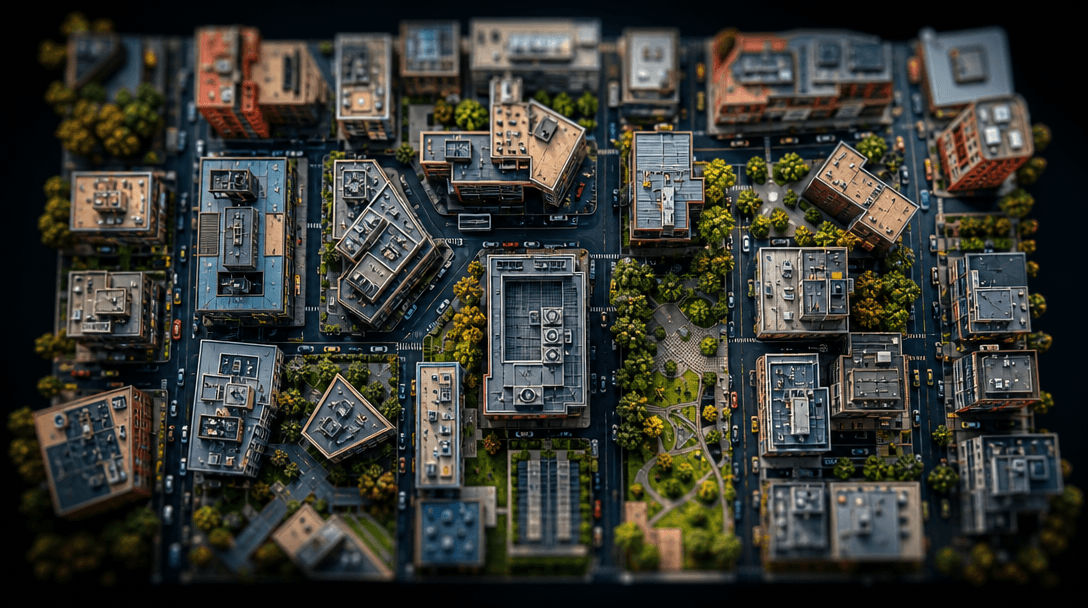
Straight-down aerial view of a miniature city district — buildings from multiple orientations, rooftop mechanical plant
F · 04

Multi-angle and aerial view support

The miniature effect works across street-level, oblique, and aerial perspectives, including drone frames common in architectural documentation. The AI adapts the blur plane angle and colour grade to camera height automatically, so a bird's-eye aerial receives the same convincing miniature read as a pedestrian façade shot. This makes the template practical for real estate listings, city-planning presentations, and social content that mixes multiple camera positions across a single project.

Showcase

See it in action

Real outputs generated by our pipeline — no curated cherry-picks.

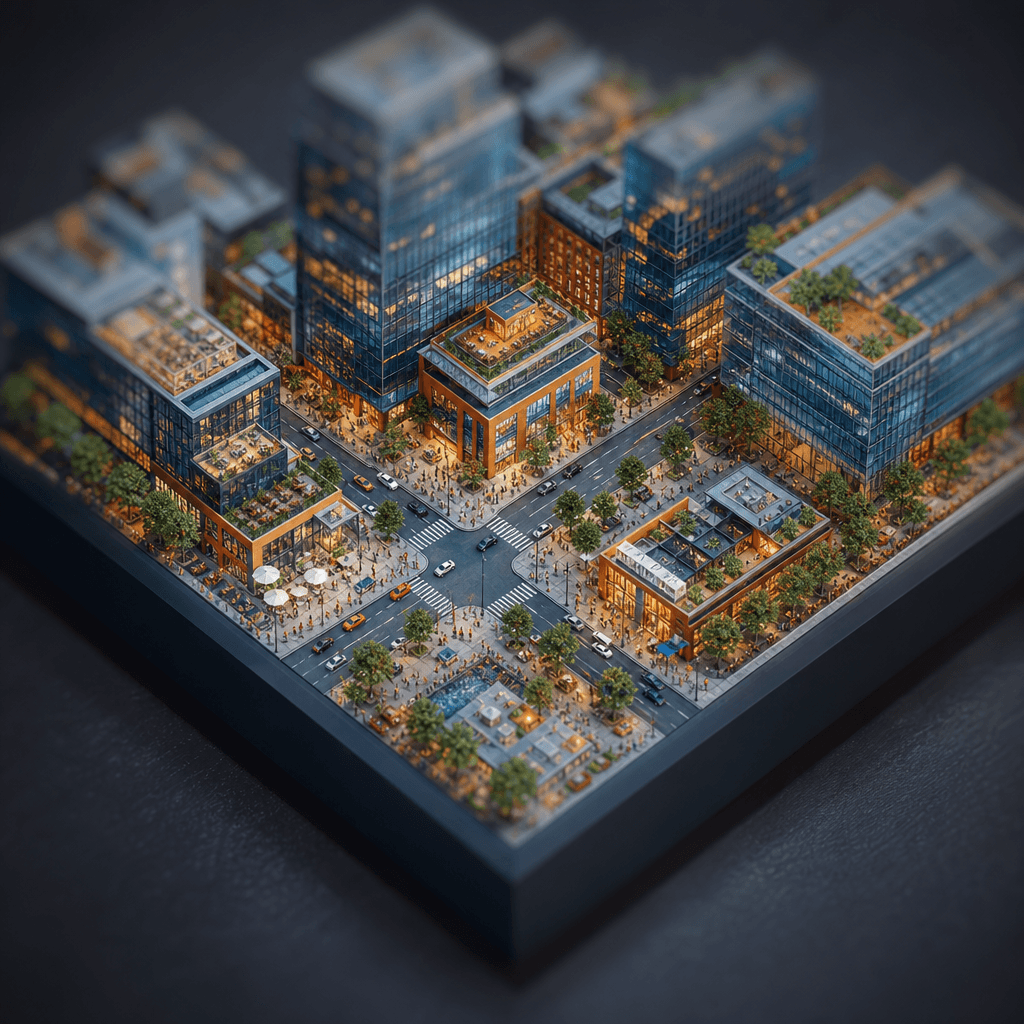
Aerial overhead view of a dense city block — glass office towers, retail plinths, tree-lined streets — rendered as an ex
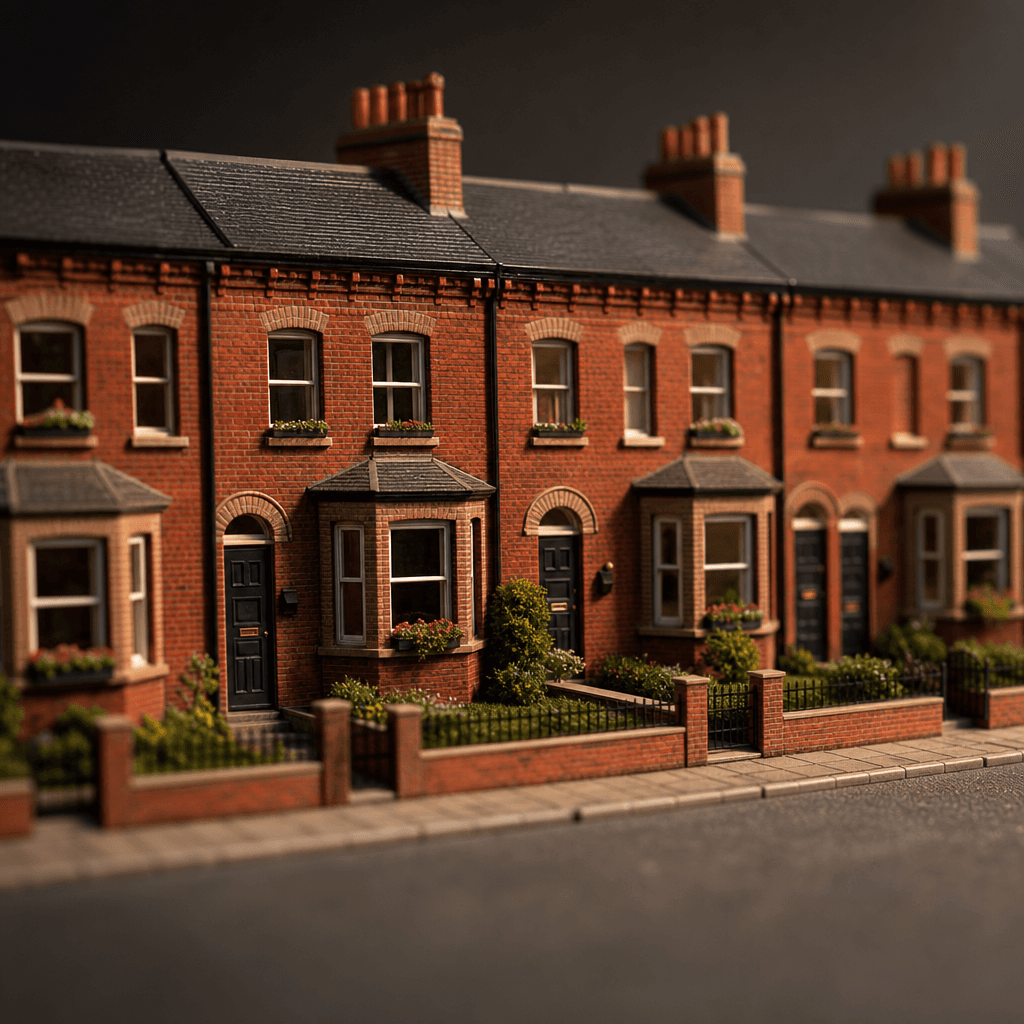
Street-level photograph of a red-brick Victorian terrace transformed into a pristine scale model. Perfect tilt-shift bok
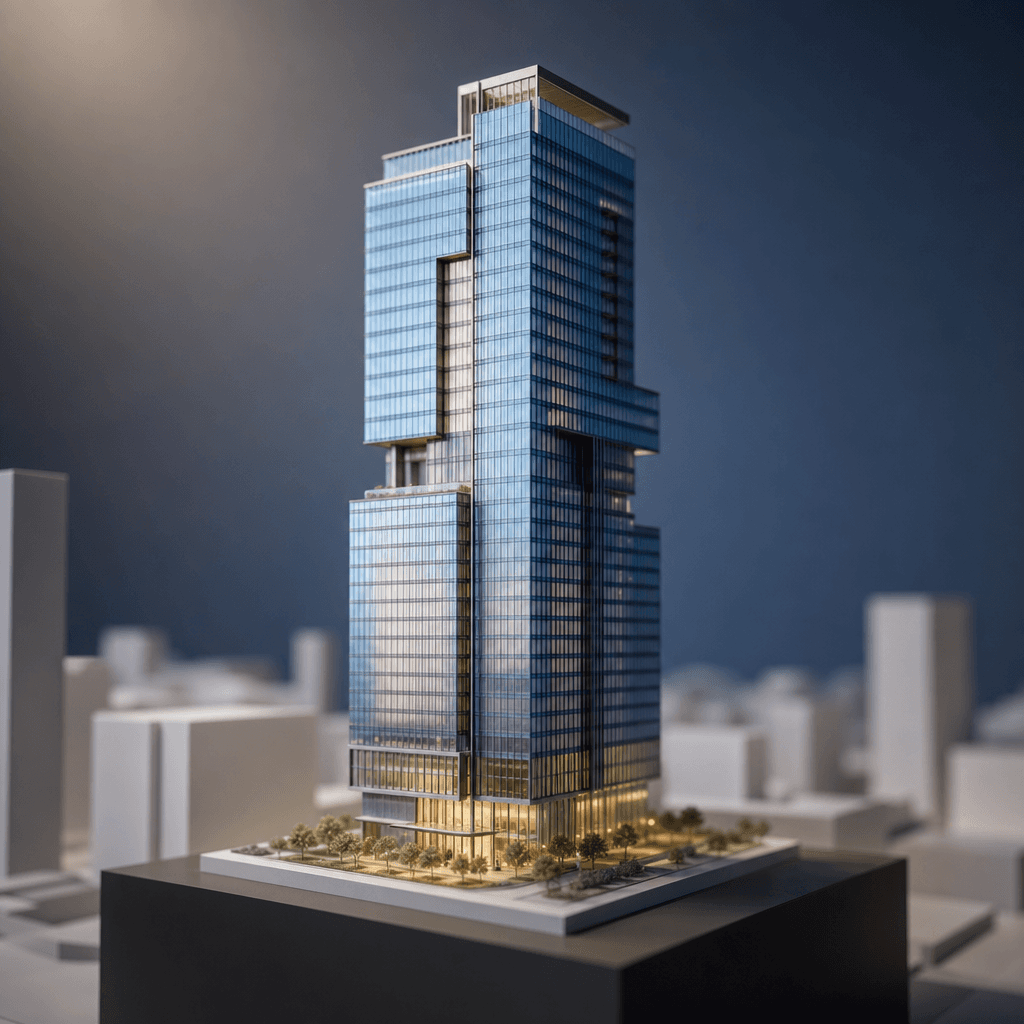
A contemporary glass-and-steel skyscraper rendered as a flawless architectural scale model on a dark matte plinth. Tilt-
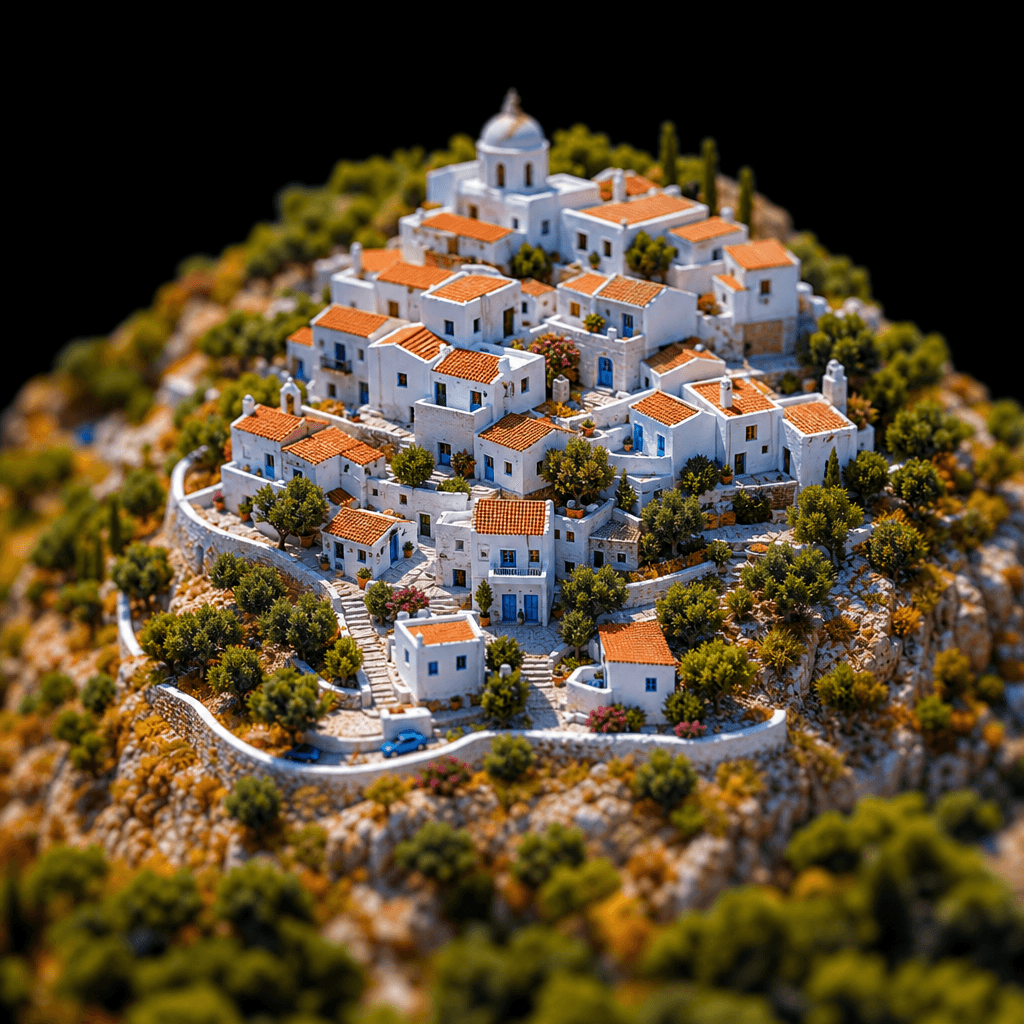
Oblique drone shot of a white Mediterranean hillside village converted into a stunning miniature diorama. Clustered cubi
Ready to ship

Pick a template, customize, publish.

Use cases

Made for every workflow

  • Architects & studios

    Show completed or rendered buildings as physical scale models without commissioning model-making. Miniature renders add a tactile, human-scaled quality to portfolio pages and client presentations that standard photography cannot match.

  • Real estate marketing

    Listings and development brochures that feature miniature-style imagery stand out in crowded property portals. The editorial quality signals creativity and attention to detail — attributes buyers and tenants associate with premium developments.

  • Urban photographers

    Transform street and aerial cityscape shots into compelling miniature-world compositions. The effect turns photographs that would otherwise appear routine into shareable, high-engagement social content.

  • Content creators & social media

    Miniature-world aesthetics reliably outperform standard photography on Reels and TikTok. Nim's template delivers consistent, high-quality results fast enough to incorporate into weekly content schedules.

  • Film & production design

    Visual development teams use miniature renders to concept environment scale early in pre-production. A single reference photograph can be transformed into a scale-model study in seconds, giving directors a concrete visual language before any physical set is built.

How it works

From idea to result in seconds

  1. Step · 01

    Upload your building photo

    Select any exterior photograph of a building — street-level, aerial, or oblique — and upload it to the architecture-miniature template in your Nim workspace.

  2. Step · 02

    Apply the miniature effect

    Nim's AI analyses the image geometry, places the tilt-shift focal plane, and renders the full miniature colour grade and texture transformation in a single generation pass.

  3. Step · 03

    Download your render

    Collect your production-ready miniature model image — optimised for print, pitch decks, or digital publishing — directly from your Nim workspace.

FAQ

Frequently asked questions

  • It is an AI image template that transforms a standard exterior building photograph into an image that looks like a hand-crafted architectural scale model. It replicates the tilt-shift depth-of-field blur and the distinctive colour grade associated with diorama and miniature-world photography, without any manual retouching.

  • Clear exterior shots with a defined horizon — street-level facades, oblique mid-rise views, and aerial drone frames all perform well. High-contrast photographs with visible structural detail produce the most convincing miniature output; heavily shadowed or very low-resolution source images will reduce fidelity.

  • Yes. The template is fine-tuned to maintain structural geometry and surface material identity. Window mullions, brick coursing, cladding seams, and glazing patterns remain legible in the output rather than being softened or hallucinated by the generation model — which matters for architects who need the render to stay a faithful representation of the actual building.

  • Renders produced on a paid Nim plan are cleared for commercial use and suitable for client presentations, real estate listings, editorial publishing, and social advertising. Review the Nim terms of service at about.nim.video/terms for full licence details.

  • Most renders complete in under a minute. Generation time depends on the resolution of the source image and current platform load, but the template is optimised for fast turnaround to support iterative architectural and marketing workflows.

  • Nim requires purchased credits to generate images — there is no free-generation tier. Outputs on unpaid plans carry a watermark, which is removed on paid plans. Visit the subscription page for current credit pricing and plan options.

  • Nim is a multi-model platform and routes architecture-miniature jobs through the model best suited to architectural detail fidelity — currently drawing on Flux-family and other leading image generation models. You do not need to choose or configure a model manually; the template handles model selection automatically.

  • Yes. The miniature effect adapts the tilt-shift blur plane to camera elevation automatically, so aerial and bird's-eye perspectives receive the same convincing scale-model read as street-level shots. This makes it practical for city-planning presentations and large development projects.

  • A Photoshop tilt-shift filter applies a static lens blur but does not alter colour grading, shadow behaviour, or surface material rendering to match scale-model aesthetics. Nim's AI template performs a full generative transformation — including colour grade, saturation, and texture adaptation — producing a more convincing miniature result with far less manual work.

  • The template is optimised for exterior building photography where a clear horizon and structural depth cues are present. Interior shots lack the depth geometry the tilt-shift plane relies on, so results will be less convincing — for interior work, the interior-design template category on Nim is a better starting point.

Get started

See what you can make

Explore more

Discover more AI tools